Select city


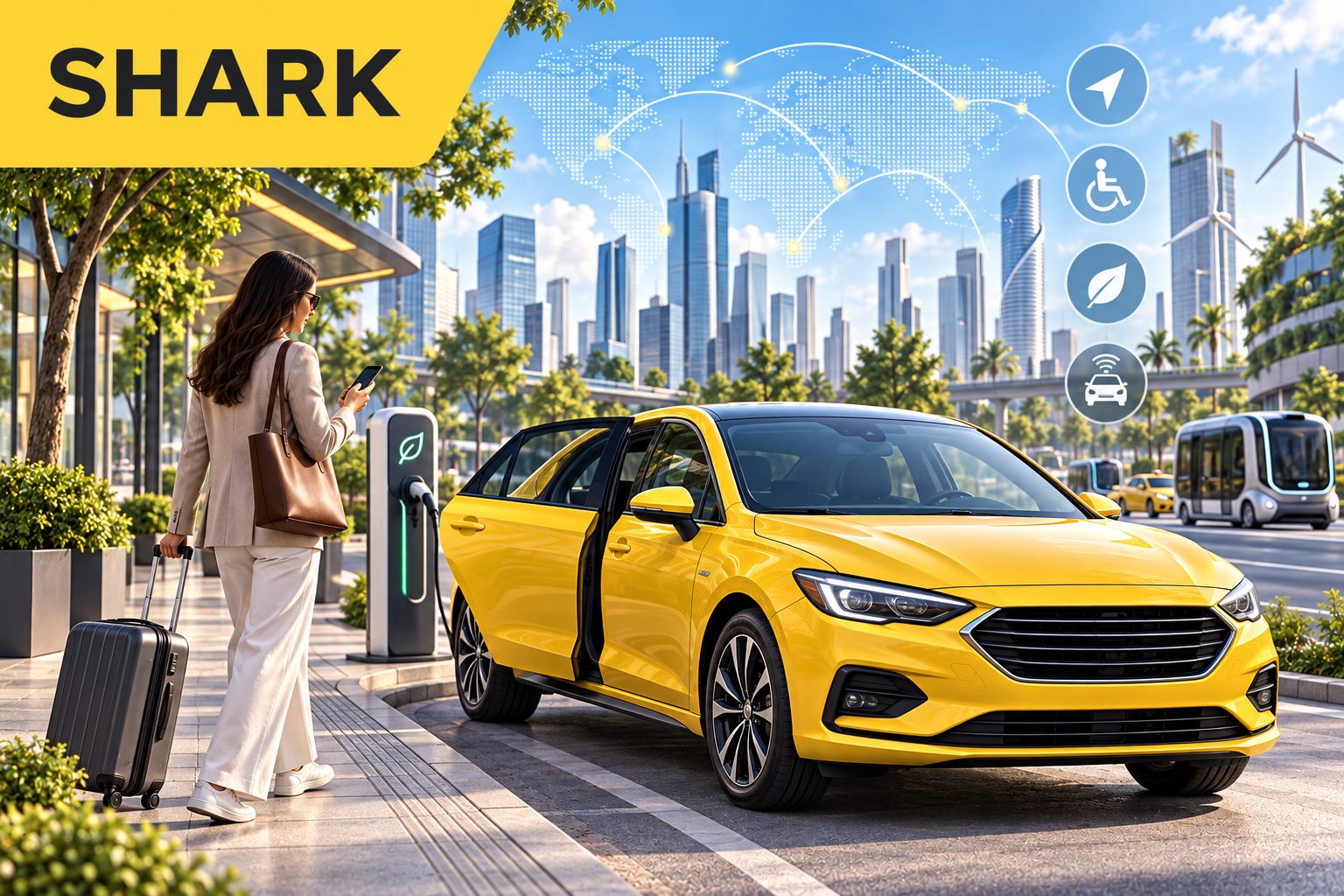
Taxi industry innovation is no longer defined by app booking or cashless payment alone. A modern urban ride depends on an interconnected system: the vehicle, charging infrastructure, navigation, dispatch logic, accessibility standards and clear passenger communication. Cities are adopting these elements at different speeds, yet the direction of travel is increasingly visible.
This overview explains six technologies shaping the future of taxis. The international examples illustrate broader market developments; they should not be read as a list of features available from every operator or in every city. Vehicle availability and booking options still need to be confirmed for each individual journey.
A high-mileage taxi needs more than a suitable battery. Drivers require convenient chargers, predictable charging times and a practical way to plan energy stops around working hours. Fleet electrification therefore connects vehicle policy with property, electricity supply and street infrastructure.
London has required taxis entering licensing for the first time to be zero-emission capable since 2018, as explained by Transport for London. New York City is following staged annual targets through its Green Rides initiative: by 2030, trips dispatched by high-volume ride services are intended to use either zero-emission or wheelchair-accessible vehicles. These policies show why successful electrification is measured across vehicles, chargers and accessible transport rather than by a single car model.
Dispatch software can match a request with information about distance, traffic, vehicle type and passenger requirements. Demand forecasting adds likely patterns for a district and time of day. When the underlying information is reliable, this can limit empty repositioning and improve estimated pickup times.
Prediction should not make the booking process harder to understand. A passenger needs to know whether a request has merely been received, whether a vehicle is still being sought or whether a specific car has been assigned. Clear stages and an easy way to correct a misplaced pin remain essential even when complex models operate behind the screen.
A single map pin is often ambiguous at an airport, railway station, shopping centre or large office complex. One address may contain several doors, parking levels and restricted kerbs. Digital pickup instructions can add a terminal, exit number, side of the street or short landmark to the geographic coordinate.
Future platforms may connect more closely with city data about road closures, temporary event zones and legal stopping areas. Human context will still matter. A map rarely knows which entrance a host has chosen for guests or whether a particular door closes after business hours.
An accessible ride is an operational chain rather than a filter in an app. The request must reach the right vehicle, allow a realistic pickup interval and communicate any boarding assistance to the driver. Some passengers may also need text-based contact, space for a mobility device or a suitable kerb position.
New York City’s Taxi & Limousine Commission publishes dedicated information on accessible taxi and for-hire travel, including requests through licensed apps or by telephone. The lesson for the wider industry is practical: interface design matters only when a trained service process and an appropriate vehicle stand behind it.
A digital booking record can show which vehicle was assigned, when its status changed and how the journey progressed. Analytics may also help identify a long unplanned stop or a major route deviation. At the same time, detailed location records create a responsibility to protect personal information and retain only what is needed for booking, payment and support.
The passenger-facing result should remain simple. The rider can verify the vehicle’s make, colour and registration, understand the current stage of the booking and reach support without searching through multiple screens. More data is useful only when it produces a clearer decision.
Driverless passenger services have moved beyond closed demonstrations. Waymo, for example, offers fully autonomous ride-hailing in several US cities. Operations rely on mapped service areas, onboard sensors, local approvals and an extensive support system.
Those boundaries are part of the technology. Weather, unusual road layouts, construction and regulatory conditions influence where and when an autonomous service can operate. Robotaxis are therefore likely to expand as a distinct segment while driver-operated taxis, accessible vehicles and specialist services continue to meet journeys that require different capabilities.
The most valuable outcome is a more predictable trip, not a futuristic-looking vehicle. Riders benefit when they can set an accurate pickup point, select an appropriate vehicle, see a meaningful booking status and change details without confusion.
Passengers can use the SHARK app to request rides in the cities it serves. Information for journeys in the capital is available on the Kyiv taxi page. The availability of a specific vehicle or additional requirement should be confirmed during booking. The practical future of taxi transport will be built where digital tools describe the real journey accurately and help people make informed choices.